• Unmukts.com

    The Historic: “Mother of All Deals”

    By Editorial Desk, Unmukt

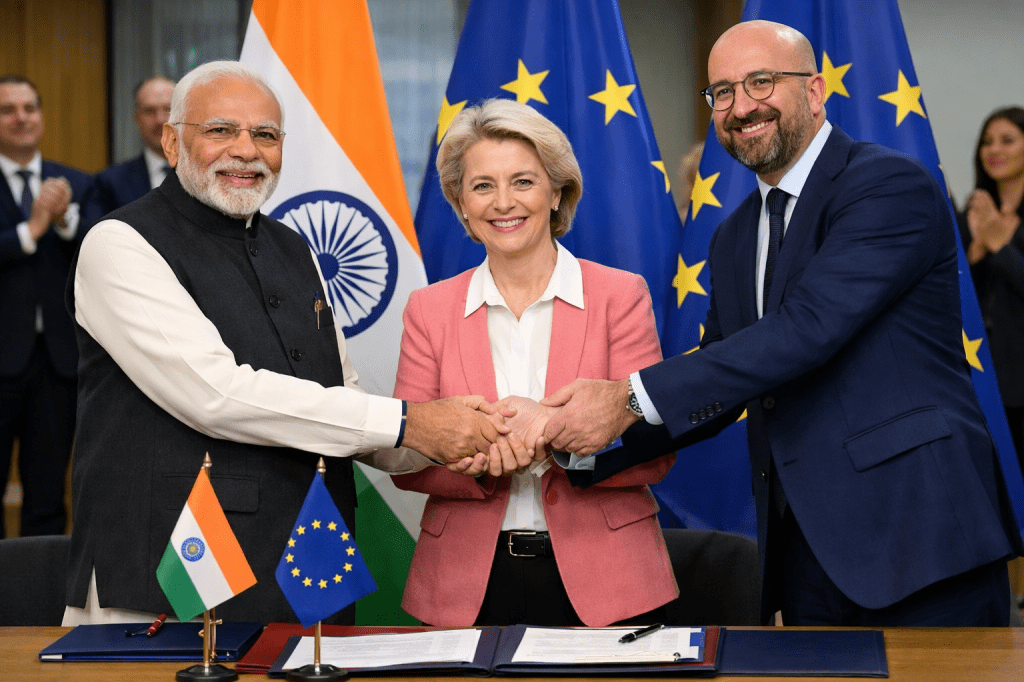
    When India and the European Union announced the conclusion of their long‑awaited Free Trade Agreement in January 2026, it was quickly christened the “mother of all deals.” The phrase was not hyperbole. It reflected both the sheer economic scale of the agreement and its deeper strategic intent at a time when the global trading order is under visible strain.

    This deal is not merely about tariffs, quotas, or market access. It is about re‑balancing power, rebuilding trust in rule‑based trade, and positioning India and Europe for a world that is increasingly multipolar, protectionist, and geopolitically contested.

    A Deal Two Decades in the Making

    Negotiations between India and the EU have spanned nearly twenty years, stalled repeatedly by disagreements over agriculture, automobiles, data, and regulatory standards. What changed now is not just political will, but strategic necessity.

    Europe is seeking reliable partners as it reduces over‑dependence on China and hedges against uncertainty in trans‑Atlantic trade. India, on the other hand, is emerging as a manufacturing, services, and innovation hub that cannot remain outside major trade architectures if it wishes to scale sustainably.

    The convergence of these interests explains why compromises once thought politically impossible, especially on automobiles, spirits, and services, have finally materialised.

    What the Deal Really Delivers

    At its core, the agreement covers almost the entire spectrum of modern trade:

    • Goods: Gradual elimination or reduction of tariffs on roughly 96% of traded goods by value.
    • Services: Improved access for Indian IT, business services, and professionals; clearer regulatory pathways in the EU.
    • Investment: Greater certainty and facilitation mechanisms, crucial for long‑term capital flows.
    • Green and Digital Cooperation: Joint frameworks on green hydrogen, clean technologies, and digital trust standards.

    The much‑debated automobile provision deserves special mention. India has agreed to phased tariff reductions for European cars, while prudently protecting its domestic EV ecosystem through time‑bound exclusions and quotas. This is not capitulation; it is calibrated liberalisation.

    Long‑Term Impact on the Indian Economy

    For India, the agreement is a structural opportunity, not a short‑term windfall.

    1. Manufacturing Upgrade: Exposure to European competition will push Indian manufacturing up the value chain for better quality, stricter standards, and deeper integration into global supply chains.
    2. Export Expansion: Textiles, pharmaceuticals, engineering goods, gems and jewellery gain preferential access to one of the world’s richest consumer markets.
    3. Investment Inflows: European firms, reassured by tariff certainty and regulatory cooperation, are more likely to invest directly in Indian production rather than merely export.
    4. Green Transition: Collaboration on green hydrogen and clean technologies aligns perfectly with India’s long‑term energy and climate goals.

    There will be adjustment pains, particularly in sensitive sectors like dairy or small‑scale manufacturing, but shielding inefficiency indefinitely is not an economic strategy. Competitiveness is.

    What Europe Gains

    For the EU, India represents something increasingly rare: scale combined with growth.

    • A vast consumer market with rising incomes.
    • A democratic, rule‑based partner at a time when values and reliability matter in trade.
    • An alternative production base that reduces strategic exposure to geopolitical rivals.

    European exporters, from automobiles and machinery to wines and processed foods, gain predictable access to a market that was previously one of the most protected among major economies.

    More importantly, Europe gains a long‑term partner in shaping standards for the green and digital economy of the future.

    The Geopolitical Subtext: The United States Factor

    No serious reading of this deal is complete without acknowledging the United States.

    The global trade environment is increasingly shaped by unilateral tariffs, industrial subsidies, and strategic decoupling, particularly in the United States and China relations. Even close allies of the United States have learned that economic policy in Washington can change sharply with domestic politics.

    In this context, the India-EU Free Trade Agreement acts as a hedge against uncertainty. For India, it reduces dependence on any single export destination. For Europe, it supports diversification of supply chains away from geopolitical flashpoints. For the global system, it signals that large economies can still choose cooperation over confrontation.

    This is not an anti-United States deal. It reflects a post-unipolar world where economic resilience is built through multiple strong partnerships rather than reliance on a single power centre.

    Why This Deal Was the Need of the Hour

    This agreement became inevitable due to three converging realities in the global economic landscape. First, global trade has entered a phase of fragmentation, with the paralysis of the World Trade Organization and the steady rise of protectionism making bilateral and regional arrangements unavoidable. Second, both India and Europe have come to clearly understand the risks associated with excessive concentration of supply chains in a single geography, a lesson learned through repeated disruptions and strategic shocks. Third, India today is far more confident, capable, and competitive than it was a decade ago, with stronger institutions, deeper markets, and greater manufacturing and services capacity.

    Taken together, these factors show that the deal represents India’s transition from a defensive trade posture to a selectively open and strategically confident economy.

    The Road Ahead: Implementation Matters More Than Headlines

    The real test will lie in execution:

    • Transparent rules of origin.
    • Smooth customs and regulatory coordination.
    • Support mechanisms for sectors facing adjustment stress.
    • Continuous political commitment on both sides.

    If handled well, this agreement can shape India–Europe economic relations for a generation.

    More Than a Trade Deal: Mother of all Deal

    The India EU mother of all deals is ultimately about choice, the choice to engage, to compete, and to cooperate in a world that is steadily drifting towards economic nationalism.

    For India, it is a clear statement that the country belongs at the centre of the global economic architecture. For Europe, it represents an investment in long term stability and growth beyond its immediate neighbourhood.

    History will judge this agreement not by the noise of contemporary debates, but by whether it helped create a more resilient, balanced, and genuinely multipolar global economy. On that measure, this deal begins with a strong and credible foundation.

    Unmukt believes that economic confidence, not protectionist fear, is the foundation of national strength.
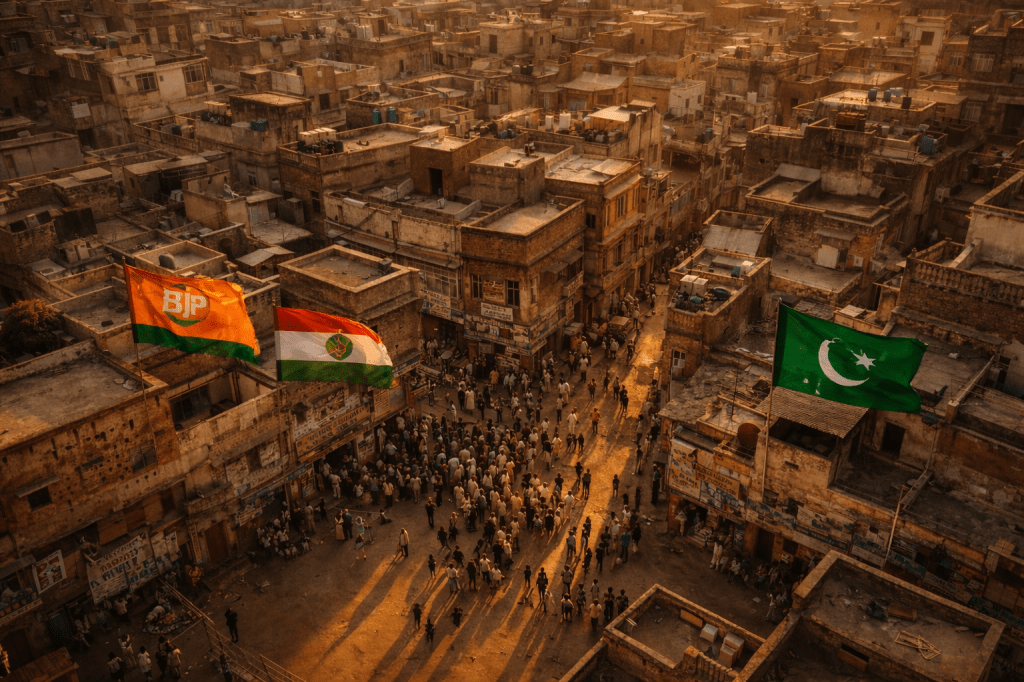

  • In recent years, the rise of AIMIM and similar Muslim-centric parties in Muslim-dominated constituencies has sparked debate about voting behaviour and political incentives. Most analysts attribute this to identity politics or “polarization.” However, a deeper look suggests a more structural and historical dynamic at play—one that exposes the long consequences of Congress’s asymmetric communal strategy since Independence and the contrasting political behaviour of Hindu and Muslim electorates.

    I. Muslim Voting Has Historically Been Bloc-Based

    In constituencies with 35–60 percent Muslim population, the voting pattern shows high consolidation behind a single party or candidate. This is not new. During the Congress era, the Muslim vote consolidated behind Congress; in the post-Mandal era, behind regional parties like SP, RJD, and TMC; and today, increasingly behind AIMIM or similar formations. The logic is simple: bloc voting maximizes bargaining power. It secured Cabinet berths under Congress, district-level patronage under SP/RJD, and now descriptive representation under AIMIM.

    II. Hindu Voting Has Never Been Bloc-Based

    The Hindu electorate, despite being nearly 80 percent of the population, has historically voted through the prisms of caste, region, and benefit allocation:

    • Marathas with NCP/INC
    • Patidars with Congress (earlier), BJP (later)
    • Yadavs with SP
    • Jats with RLD
    • Dalits with BSP
    • Lingayats with BJP (Karnataka)
    • Kammas/Reddys in Andhra
    • OBC splits across regions

    If the Hindu electorate voted like the Muslim electorate, no smaller outfit (SP, BSP, RJD, TMC, NCP, DMK, etc.) could have ever emerged. The fact that they did emerge—and ruled—proves Hindu voting is fragmentary, not communal.

    III. BJP’s Rise Is Not Primarily Hindu Consolidation but Governance-Based

    The political Left insists BJP wins because of “Hindu polarization.” This claim does not stand to scrutiny. If Hindu polarization were the primary determinant, BJP would win 80 percent of seats, mirroring the religious demographic. Instead, BJP’s vote share is between 37–42 percent nationally, climbing through performance, not religious bloc voting.

    BJP’s appeal is built on:

    • infrastructure completion (highways, rail, power)
    • welfare (housing, toilets, piped water, food)
    • governance execution
    • corruption control and direct benefit transfer (DBT)
    • national security and foreign policy
    • respect for majority cultural identity without policy concessions to clerical groups

    Unlike Congress-era politics, BJP delivered tangible public goods visible to beneficiaries regardless of caste or religion.

    IV. Congress Practiced Asymmetric Communal Politics

    For six decades, Congress secured Muslim vote through institutional and legal concessions. Key examples include:

    1. Shah Bano Case (1985–1986)
      When Supreme Court upheld Shah Bano’s maintenance rights, the Rajiv Gandhi government overturned the verdict through parliamentary legislation to appease conservative Muslim clergy. This signalled that secularism would be bent to secure bloc votes.
    2. Waqf Administration and Patronage Networks
      Congress governments controlled waqf boards not for reform but for political patronage, allowing clergy-politician networks to funnel benefits without structural modernization.
    3. Uniform Civil Code Frozen for Vote Bank Considerations
      Despite constitutional directive principles, UCC was shelved indefinitely to retain Muslim clerical support.

    These actions incentivized bloc voting behaviour among Muslims and signalled that communal concessions would be rewarded.

    V. The Rise of AIMIM Mirrors the Muslim League

    As Congress weakened, Muslim-centric parties filled the vacuum, just as Muslim League capitalized on communal bargaining in the 1930s-40s. Key parallels:

    • descriptive representation (our leaders for our community)
    • negotiation from strength in Muslim-majority clusters
    • abandonment of integrative secularism once Congress ceased to deliver

    When AIMIM wins in Seemanchal, Aurangabad, or Byculla, it reflects not polarization but the rational pursuit of bargaining power.

    VI. Why Muslims Left Congress and Secular Parties

    The shift away from Congress/SP/TMC toward AIMIM or clergy-backed formations is not due to development; it is due to three perceptions:

    1. Congress no longer protects Muslim interests.
    2. Congress reduced Muslim representation to avoid backlash.
    3. Muslim demographic share in certain seats makes self-representation viable.

    In essence, as soon as Congress ceased to deliver asymmetric benefits, the Muslim bloc recalibrated.

    VII. The Long-Term Consequence: Fragmentation, Not Integration

    India’s Muslim politics today resembles the pre-Independence communal bargaining pyramid: small clusters of concentrated Muslim populations electing Muslim-centric parties to increase negotiating leverage. This weakens integrative politics and strengthens identity segmentation.

    Meanwhile, the Hindu electorate—still caste-fragmented and benefit-driven—remains structurally incapable of bloc voting unless existentially provoked. BJP’s rise comes not from religious consolidation but from governance and cultural respect without apology.

  • A Chronological & Civilizational History of the Jyotirlinga on the Western Coast of India

    Somnath occupies a unique place in the civilisational memory of Bharat. It is not merely a temple dedicated to Shiva. It is a point where mythology, history, political power, invasion, memory, economics, faith and philosophy converge. Few monuments in the world have endured such prolonged cycles of destruction and reconstruction. Even fewer have outlasted the empires that attempted to erase them.

    Somnath teaches a lesson that European historians often miss and Indian children are seldom taught. Architecture may fall when attacked, but civilisations that remember and rebuild do not disappear. Somnath has been rebuilt many times because the civilisation that revered Mahadev refused to accept erasure as fate.

    Origins in Classical Tradition

    The Skanda Purana, particularly the Prabhasa Khanda, describes a sequence of four primordial reconstructions of Somnath. These reconstructions span multiple epochs of Indic time.

    According to this account, Somnath was built by:

    • Chandra in gold
    • Ravana, king of Lanka, in silver
    • Shri Krishna of the Yadava lineage, in wood
    • The Pandavas in stone after the Mahabharata

    This sequence places Somnath across Vedic, Itihasa and Puranic periods, long before the beginnings of political dynastic history. A temple that has been built in four epochs using four different materials is not architecture. It is civilizational memory rendered visible.

    The First Historical Attack in 1025 CE

    The first fully documented attack on Somnath took place in 1025 CE when Mahmud of Ghazni invaded Gujarat. This is one of the most recorded temple raids in medieval history.

    Persian chroniclers record that:

    • Treasure from the temple was carried away using approximately one thousand camels
    • The loot included gold, silver, precious gems and ritual objects
    • The idol was broken and fragments were transported to Ghazni

    Economic historians reconstruct the value of the loot to be:

    • Roughly twenty million to thirty five million silver dirhams in period terms
    • Modern valuations place this within a range of approximately four thousand crore rupees to fifteen thousand crore rupees, depending on whether one uses metal equivalence or purchasing power parity

    To Mahmud, Somnath was not primarily a religious target. It was a financial target. Temples in India functioned as:

    • Endowments
    • Depositories for traders and guilds
    • Trust banks for merchants and pilgrims
    • Wealth repositories for communities

    Looting Somnath was therefore an act of extracting capital. But Bharat rebuilt.

    The Attack in 1299 CE

    The next major record of destruction comes from 1299 CE when the generals of Alauddin Khilji, particularly Ulugh Khan and Alaf Khan, attacked Gujarat.

    Chroniclers note that:

    • The idol of Somnath was taken to Delhi
    • The temple was looted and demolished once again

    This period represents what can be described as a political economy of extraction. Wealth from temples funded military campaigns rather than ornamentation or public welfare. Rebuilding was discouraged. Yet Bharat rebuilt once again.

    The Gujarat Sultanate Period, 1395 CE to 1451 CE

    The third phase of destruction spans the Muzaffarid dynasty of the Gujarat Sultanate. This period involved repeated interruptions of reconstruction.

    It included:

    • Destruction in 1395 CE
    • Further demolition and suppression of rebuilding efforts in 1451 CE

    Here, the motive was not purely financial. Somnath was a symbol of sovereignty. Controlling or destroying it was a means of asserting political authority. Bharat rebuilt again.

    The Mughal Period and the Attack in 1706 CE

    During the reign of Aurangzeb in 1706 CE, the temple was demolished once more. The Mughal imperial system treated temples as instruments of political communication.

    Temple destruction served as:

    • Legitimacy building
    • Religious signalling
    • Imperial assertion of control

    These actions are documented in Mughal records including firmans. But Somnath did not disappear from memory. Bharat rebuilt in silence and kept the site sacred through ritual and memory.

    Reconstruction After Independence, 1947 to 1951

    After 1947, Sardar Vallabhbhai Patel assumed direct responsibility for the reconstruction of Somnath. This was not an act of communal assertion. It was civilizational restitution.

    Important milestones include:

    • The decision to reconstruct in 1947 and 1948
    • Construction between 1949 and 1951
    • The consecration in 1951

    Jawaharlal Nehru discouraged the reconstruction, considering it revivalist. Patel and K M Munshi insisted that reclaiming Somnath was essential for civilizational dignity and continuity. During the consecration, President Rajendra Prasad said:

    “Somnath is the symbol of the power of reconstruction inherent in our society.”

    This statement summarizes one thousand years of civilizational experience.

    Civilizational Accounting

    What happened to those who looted Somnath? Their fortunes demonstrate the difference between empire and civilization.

    Empires of the invaders eventually:

    • Dissolved
    • Became dependent
    • Lost legitimacy

    Their descendants struggle for identity and economic survival.

    Meanwhile Somnath:

    • Stands
    • Attracts pilgrims
    • Accumulates wealth
    • Deepens Dharmic memory

    This contrast reveals a profound point. Looting produces short lived power. Civilizational endurance produces continuity. States pursue wealth. Civilisations pursue memory.

    What Somnath Represents

    Somnath is not merely a temple. It is a civilizational monument. It is older than the religions that attacked it. It predates the kingdoms that looted it. It predates colonial systems. It predates modern ideologies. If humanity survives for another five thousand years, Somnath will still be understood.

    Mahadev as Devadhideva and Adi Yogi

    To speak of Somnath without speaking of Shiva diminishes the subject. Shiva is Devadhideva. He is the first yogi, the first guru, the lord of dissolution and the teacher of humanity. He does not demand followers. He does not require prophets. He does not insist on conversion. He offers no heaven for obedience and threatens no hell for refusal. His wealth is not gold but awareness.

    When Shiva punishes, it is not theatrical. It is cosmic. Others claim to save the world. Shiva is the world. Others call themselves messiahs. Shiva is Satya, the very truth. Others exist within time. Shiva exists beyond time.

    Why Somnath Will Outlive Empires

    Empires are built upon power. Civilisations are built upon memory. Somnath belongs to the latter. Those who looted it disappeared. Those who mocked it were forgotten. Those who ruled against it lost their crowns. Somnath remains, not merely as stone but as continuity.

  • जीत किसी एक दिन में नहीं मिलती।
    वह हर दिन की गई ईमानदार कोशिशों से बनती है।

    अक्सर लोग सफलता को अचानक मिला हुआ परिणाम समझ लेते हैं। लेकिन सच यह है कि हर जीत के पीछे लगातार मेहनत होती है। जो लोग रोज प्रयास करते हैं वही आगे बढ़ते हैं।

    विजेता वही होते हैं जो हर दिन कोशिश करते रहते हैं।
    वे परिणाम का इंतजार नहीं करते।
    वे प्रक्रिया पर भरोसा रखते हैं।

    कई बार दिन में काम पूरा नहीं होता।
    कई बार रात में नींद पूरी नहीं होती।
    इसके बावजूद जो व्यक्ति अगली सुबह फिर से अपने लक्ष्य की ओर बढ़ता है वही मजबूत होता है।

    हार असफलता नहीं होती।
    हार एक सीख होती है।
    जो लोग इस सीख को समझते हैं वही आगे जाकर सफल होते हैं।

    जीत उन्हीं के पास आती है जो धैर्य रखते हैं।
    जो रोज अपने कर्तव्य को निभाते हैं।
    जो परिस्थितियों को दोष नहीं देते बल्कि समाधान खोजते हैं।

    जीत एक दिन हर कोशिश करने वालों को अपने पास बुलाकर गले लगाती है और विजय घोषित करती है।
    उस दिन लोग केवल सफलता देखते हैं।
    लेकिन उस सफलता के पीछे छुपी मेहनत बहुत कम लोग देखते हैं।

    अगर आज रास्ता कठिन लग रहा है तो रुकने की जरूरत नहीं है।
    अगर प्रगति धीमी है तो निराश होने की जरूरत नहीं है।

    आपका काम केवल कोशिश करना है।
    हर दिन।
    पूरी निष्ठा के साथ।

    क्योंकि जीत को वही लोग मिलते हैं जो रोज प्रयास करना नहीं छोड़ते।

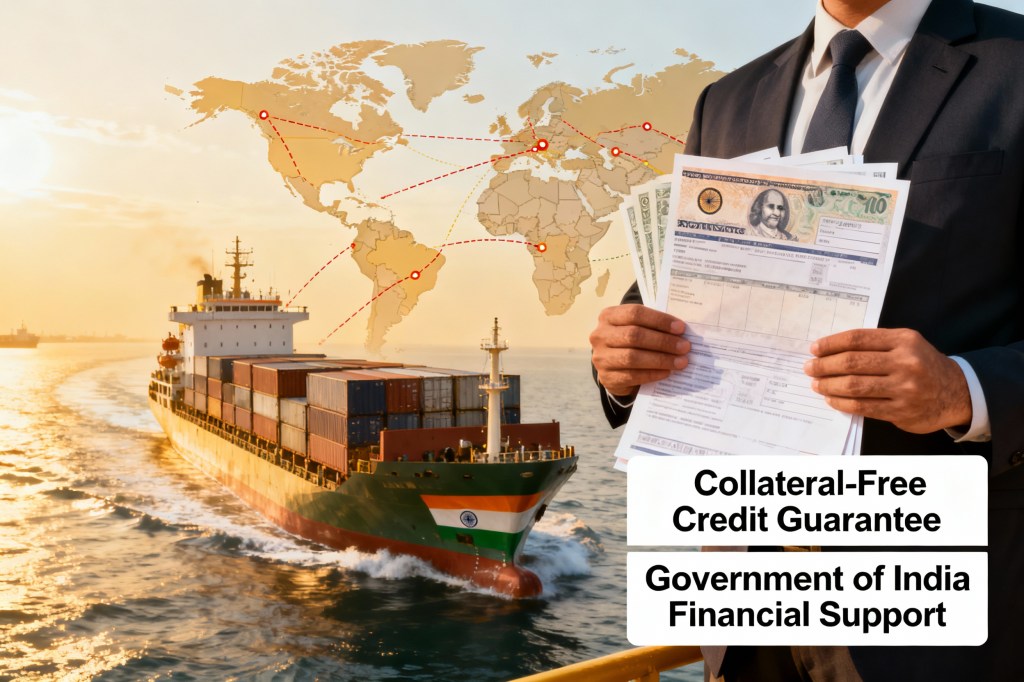
  • The Union Cabinet, chaired by Prime Minister Narendra Modi approved the Credit Guarantee Scheme for Exporters CGSE on November 11 2025. This move is set to reshape export financing in India and provide meaningful relief to businesses that often struggle with tight liquidity and long payment cycles. For MSME exporters in particular the scheme brings timely support without the usual requirement of collateral.

    What the Scheme Offers

    Twenty Thousand Crore Collateral Free Credit

    CGSE provides one hundred percent government backed credit guarantee coverage for exporters.
    The National Credit Guarantee Trustee Company Limited NCGTC will offer the guarantee to banks and financial institutions allowing them to extend collateral free loans up to fifty crore rupees.

    This removes a major barrier for small exporters who frequently find it difficult to pledge property or assets for working capital.

    Extra Twenty Percent Working Capital

    Eligible exporters can access an additional twenty percent of their sanctioned export working capital limit. This added liquidity helps them manage production supplies and international shipments without financial stress.

    The credit is entirely collateral free and fully guaranteed by the government.

    How the Scheme Is Managed

    Administered by the Department of Financial Services DFS
    Guarantee provider is NCGTC
    Lenders include banks and non banking financial institutions
    Oversight is handled by a management committee led by the Secretary of DFS

    The scheme remains valid until March 31 2026 and may be extended based on future assessments.

    Who Can Apply

    CGSE covers both MSME exporters and non MSME exporters.
    While detailed eligibility norms are expected to be released separately the scheme is clearly targeted at businesses that need additional liquidity to continue operations scale up and handle the challenges of global trade.

    Why This Scheme Matters

    Exports Drive Growth in India

    Exports contributed twenty one percent of Indias GDP in the financial year 2024 to 2025.
    The sector supports more than forty five million jobs.
    MSMEs contribute nearly forty five percent of Indias total exports.

    Despite their importance many small exporters struggle to secure timely and affordable financing. CGSE directly addresses this financing gap by offering guaranteed collateral free credit at scale.

    Main Objectives of CGSE

    The scheme aims to

    Provide steady liquidity for exporters
    Strengthen competitiveness in global markets
    Support entry into new international destinations
    Help India move closer to the one trillion dollar export goal
    Advance the vision of Aatmanirbhar Bharat
    Protect economic stability during periods of global trade disruption

    Part of a Larger Support Package Export Promotion Mission

    Along with CGSE the Cabinet approved the Export Promotion Mission EPM with an allocation of twenty five thousand sixty crore rupees for the period from financial year 2025 to 2026 through financial year 2030 to 2031.
    Together CGSE and EPM form a combined forty five thousand sixty crore rupee support package for exporters.

    The EPM consists of two major parts

    Niryat Protsahan

    Focus on export finance
    Budget of ten thousand four hundred one crore rupees

    Niryat Disha

    Focus on non financial support such as skills market access technology and compliance assistance
    Budget of fourteen thousand six hundred fifty nine crore rupees

    This package arrives at a time when exporters face rising global uncertainty including tariff actions from major trading partners and ongoing supply chain shifts.

    Expected Impact

    The CGSE is expected to

    Unlock easier credit access for MSME dominated export sectors
    Shorten production cycles by ensuring smooth availability of working capital
    Improve international price competitiveness
    Enable exporters to enter new markets
    Reduce reliance on high cost informal financing
    Strengthen Indias foreign exchange reserves

    By eliminating the need for collateral the scheme opens the door for thousands of smaller exporters who previously found formal credit inaccessible.

    The Credit Guarantee Scheme for Exporters is more than a financing facility. It is a strategic intervention designed to secure the future of Indias export growth. With global markets undergoing rapid changes this scheme gives Indian exporters the liquidity and confidence needed to compete expand and thrive

  • India is in the middle of an entrepreneurial revolution. Every day, new founders are launching tech startups, D2C brands, and small businesses. But while ideas are easy, business registration in India still feels complex of full of legal steps, compliance requirements, and confusing paperwork.

    That’s where StartBizzIndia.com comes. It is a digital platform built to make company incorporation online faster, simpler, and 100% compliant.

    Entrepreneurs in India face multiple challenges before even opening their first bank account — from choosing the right structure (LLP, Private Limited, Sole Proprietorship) to obtaining GST registration, PAN, TAN, and licenses. Missing a single step can delay or even invalidate the process.

    The Challenge: Starting a Business in India Isn’t Always Easy

    Many startups waste time and money on trial-and-error or unreliable agents. That’s why a reliable startup registration service in India isn’t just helpful, it’s essential.

    The Solution: StartBizz India’s End-to-End Business Registration Platform

    StartBizz India simplifies every stage of business setup and compliance. Entrepreneurs can register their startup, file mandatory documents, and manage compliance, all in one place.

    Key Services:

    • Company Incorporation Online: Private Limited, LLP, OPC, and Sole Proprietorship registration.
    • Legal Documentation: Digital drafting and filing of MOA, AOA, and partnership deeds.
    • Tax & Compliance: PAN, TAN, GST, and Startup India registration.
    • Accounting & Bookkeeping: Ongoing financial management for startups and MSMEs.

    The process is transparent, affordable, and guided by experts who know Indian business law inside out.

    Why It Matters: Compliance Is the Foundation of Credibility

    In India’s fast-growing startup ecosystem, legal compliance is no longer optional. Investors, vendors, and even digital platforms now expect businesses to be registered and compliant from day one.

    Platforms like StartBizzIndia.com ensure that entrepreneurs can focus on innovation and growth while their legal foundation stays rock-solid.

    By streamlining compliance and removing bureaucracy, StartBizzIndia.com contributes to India’s Ease of Doing Business mission — helping the country’s startup economy grow faster and more transparently.

    A Blend of Technology and Expertise

    Unlike many online agents, StartBizz India combines automation with personalized support. Entrepreneurs get digital workflows for speed and human experts for accuracy.

    That hybrid model reduces errors, shortens turnaround time, and provides the confidence new founders need to take their idea live — without getting buried in legal jargon.

    The Bigger Picture: Building a Startup-Ready India

    India’s government initiatives like Startup India and Digital India have opened doors for millions of founders. Yet to truly benefit, entrepreneurs need fast, compliant, and affordable startup registration services.

    By bridging the gap between vision and execution, StartBizz India empowers founders to register their business in days — not months — and ensures they stay compliant as they grow.

    Turn Your Idea Into a Legally Registered Business

    Whether you’re an individual innovator or a small business owner, company registration online is the first step toward legitimacy, funding, and growth.

    StartBizz India helps you complete that step with confidence — handling documentation, legal compliance, and startup registration so you can focus on what truly matters: building your dream business.

    Start your business journey today at StartBizzIndia.com

  • For a quarter century, Washington invested in India with remarkable consistency. From Clinton to Biden, Republican and Democratic leaders alike pursued the same long-term goal: make India a partner, a counterweight to China, and a pillar of the 21st-century global order.

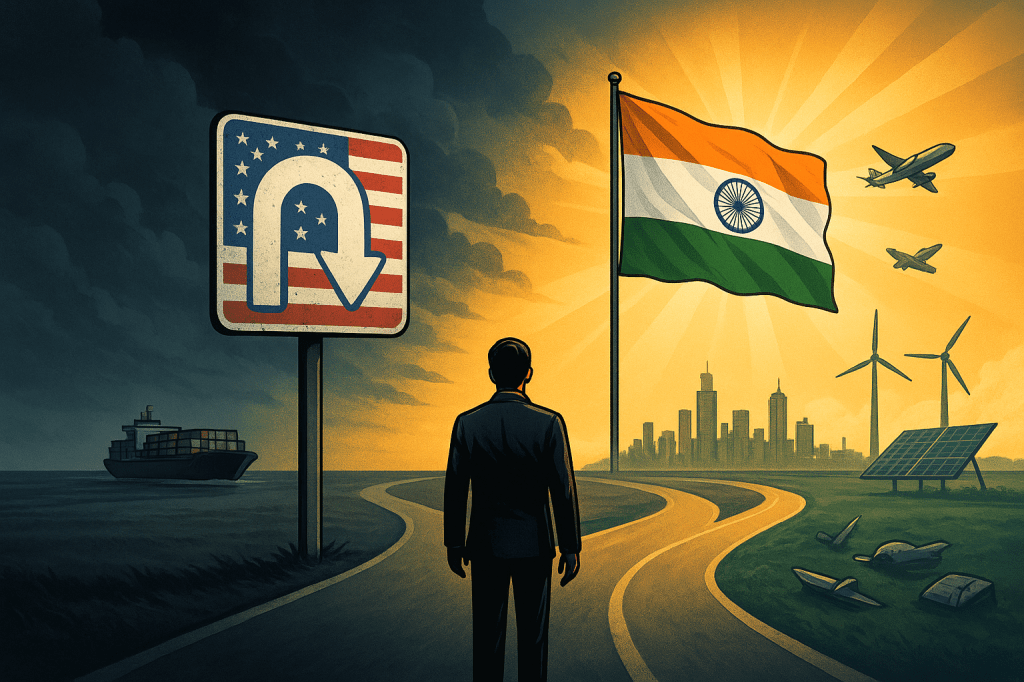
    That patient diplomacy, however, has now been shaken. Donald Trump’s second innings in the White House has brought an unexpected hostility toward India—undoing decades of effort. For New Delhi, the message is loud and clear: America remains a power that can never be fully relied upon.

    How the U.S. Courted India

    The U.S. engagement with India began in earnest with President Bill Clinton’s visit in 2000, breaking through decades of indifference. George W. Bush made the boldest leap by offering India a historic civil nuclear deal, treating New Delhi not as a rule-breaker but as a responsible global power.

    The Obama administration embedded India into its “pivot to Asia,” expanded trade ties, and supported India’s bid for a permanent seat at the U.N. Security Council. Trump’s first term, despite its theatrics, elevated the Quad (with Japan and Australia) and flaunted a personal bond with Prime Minister Modi.

    President Biden built on this continuity, pushing for cooperation in defense manufacturing and technology. By 2025, India had overtaken China in exporting smartphones to the U.S. — a symbolic win in global supply chains.

    It appeared as if the U.S.–India relationship had become irreversible. Until Trump changed course.

    Trump 2.0: A Return to Unpredictability

    With little warning, Trump reversed his India policy. New Delhi was suddenly placed in the highest-risk category of U.S. partnerships, alongside pariah states like Syria and Myanmar. Meanwhile, Trump extended overtures to Pakistan, held closed-door meetings with its military brass, and dismissed India’s economy as “dead.”

    The irony could not be greater. India today is the world’s fastest-growing large economy, the fourth-largest overall, and on track to overtake Germany by 2028 to claim the third spot. It is the second-largest arms importer and one of the world’s biggest consumer technology markets. For Washington to trivialize India’s rise is not just inaccurate—it is strategically reckless.

    India Cannot Afford Naïveté

    India has always been cautious in its foreign relations. Having been colonized, then dependent on Soviet support during the Cold War, it has long pursued a policy of strategic autonomy. Under Modi, this evolved into “multi-alignment”—building ties with Washington, Moscow, and even Beijing simultaneously.

    Persistent U.S. diplomacy was slowly shifting that balance, pulling India closer to America. But Trump’s hostility has reignited old doubts. For many Indians, this is not just a policy reversal—it is proof of America’s fundamental unreliability.

    The result? India is once again reminded that it must hedge its bets: maintaining ties with Russia, exploring a less confrontational approach with China, and strengthening its own independent capabilities.

    The Lesson for India

    Washington’s mistake may turn out to be India’s opportunity. A country that treats friends so casually cannot be the cornerstone of India’s future strategy. Instead, New Delhi must double down on self-reliance in defense, technology, and energy, while pursuing flexible partnerships across the globe.

    The U.S.–India relationship will not collapse overnight. Trade, defense cooperation, and people-to-people ties remain strong. But Trump’s insults have injected caution—and perhaps a dose of realism—into India’s strategic thinking.

    For decades, Indian policymakers were told that the destiny of the world’s oldest and the world’s largest democracy was to walk together. Today, India must remember: destiny is not given, it is forged. And in the turbulent 21st century, only those nations that rely on themselves will shape their future.

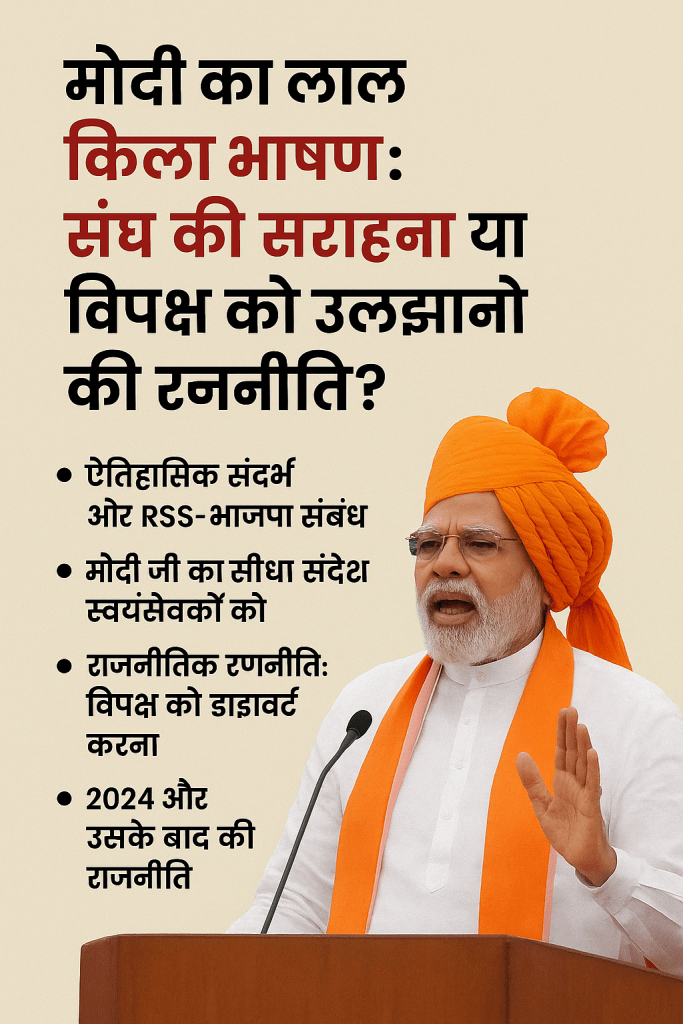
  • मोदी का लाल किला भाषण: RSS का सम्मान या राजनीतिक रणनीति?

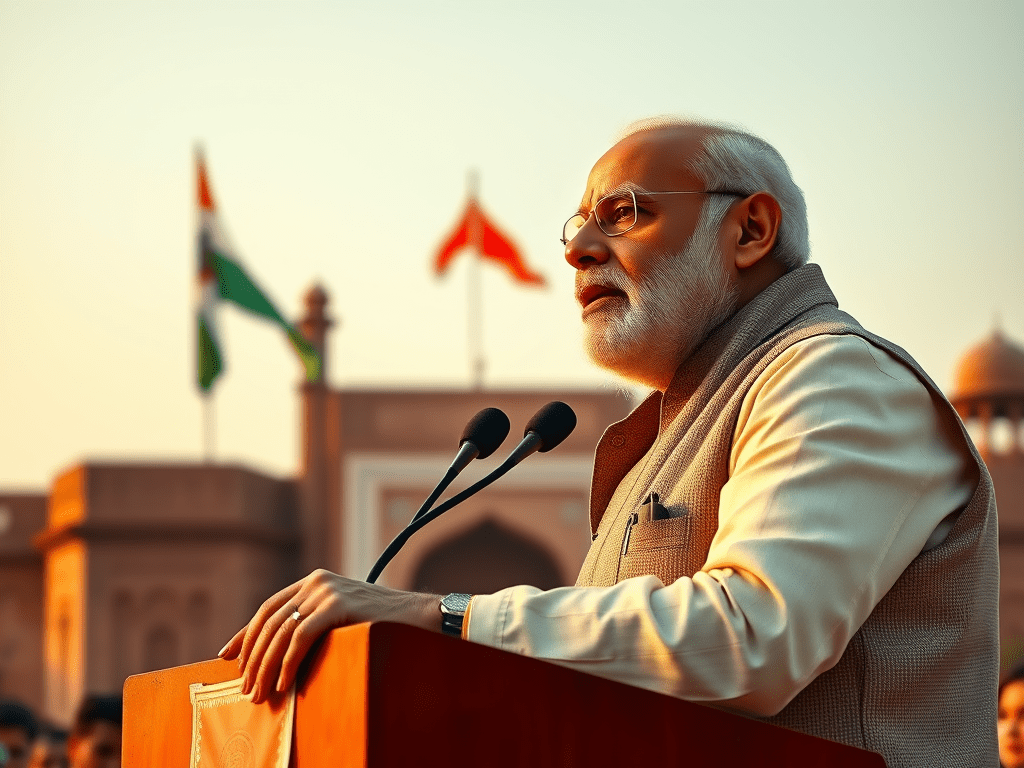
    भारत की राजनीति में हर प्रधानमंत्री का लाल किले से दिया गया भाषण एक गहरा संदेश होता है। लेकिन इस बार प्रधानमंत्री नरेंद्र मोदी ने एक ऐसा कदम उठाया जिसने सबका ध्यान खींचा। पहली बार किसी प्रधानमंत्री ने लाल किले से राष्ट्रीय स्वयंसेवक संघ (RSS) और स्वयंसेवकों के योगदान का ज़िक्र किया। सवाल यह है — क्या यह केवल सम्मान था या एक राजनीतिक रणनीति?

    ऐतिहासिक संदर्भ और RSS–भाजपा संबंध

    अब तक लाल किले के भाषणों में RSS का नाम सीधे तौर पर नहीं आया था। यहां तक कि अटल बिहारी वाजपेयी के समय भी ऐसा नहीं हुआ। हाल के वर्षों में भाजपा और संघ के बीच खटास की खबरें सामने आईं — जैसे राष्ट्रीय अध्यक्ष की नियुक्ति पर मतभेद, या मोहन भागवत के बयान जिनका अलग-अलग राजनीतिक मतलब निकाला गया।

    मोदी जी का सीधा संदेश स्वयंसेवकों को

    मोदी जी ने अपने संबोधन में सीधे स्वयंसेवकों के त्याग और समर्पण की सराहना की। यह एक आंतरिक संदेश था — कि भाजपा और संघ एक परिवार हैं, और प्रधानमंत्री स्वयं एक स्वयंसेवक होकर संघ की विचारधारा का सम्मान करते हैं। इससे कार्यकर्ताओं का मनोबल बढ़ा और संघ व भाजपा के बीच दूरी की चर्चाएँ कमज़ोर पड़ीं।

    राजनीतिक रणनीति: विपक्ष को डाइवर्ट करना

    यहां पर बड़ा सवाल यही है कि क्या मोदी जी सिर्फ़ RSS को धन्यवाद कह रहे थे या इसके पीछे रणनीतिक सोच भी है। कई विश्लेषकों का मानना है — और हमारा भी यही ओपिनियन है — कि मोदी जी ने विपक्ष का ध्यान RSS vs BJP की बहस में फंसा दिया है। इससे विपक्ष महंगाई, बेरोज़गारी, गठबंधन की चुनौतियाँ और 2024 के चुनाव जैसे असली मुद्दों पर फोकस खो सकता है।
    इसे राजनीतिक भाषा में Narrative Shifting कहा जाता है — यानी असली बहस से ध्यान हटाकर नई बहस खड़ी करना।

    2024 और उसके बाद की राजनीति

    आने वाले चुनावों में संघ की सक्रियता भाजपा के लिए निर्णायक होगी। यही कारण है कि प्रधानमंत्री ने स्वयंसेवकों से सीधा संवाद किया। उन्होंने संघ के सबसे पुराने मुद्दे — अवैध घुसपैठ और जनसंख्या असंतुलन — पर भी बात की और हाई-पावर्ड डेमोग्राफी मिशन की घोषणा की। इससे यह संदेश गया कि मोदी सरकार न सिर्फ़ संघ की विचारधारा सुन रही है बल्कि उसे नीतिगत रूप भी दे रही है।

    मोदी जी का भाषण केवल एक औपचारिकता नहीं था। यह तीन स्तरों पर काम करता है:

    1. स्वयंसेवकों का मनोबल बढ़ाना,
    2. भाजपा और RSS में दूरी की अफवाहों को रोकना,
    3. और विपक्ष को नई बहस में उलझाकर चुनावी नैरेटिव पर पकड़ बनाए रखना।

    इसलिए यह भाषण सिर्फ़ तारीफ़ नहीं, बल्कि एक सोची-समझी राजनीतिक चाल भी माना जा सकता है।

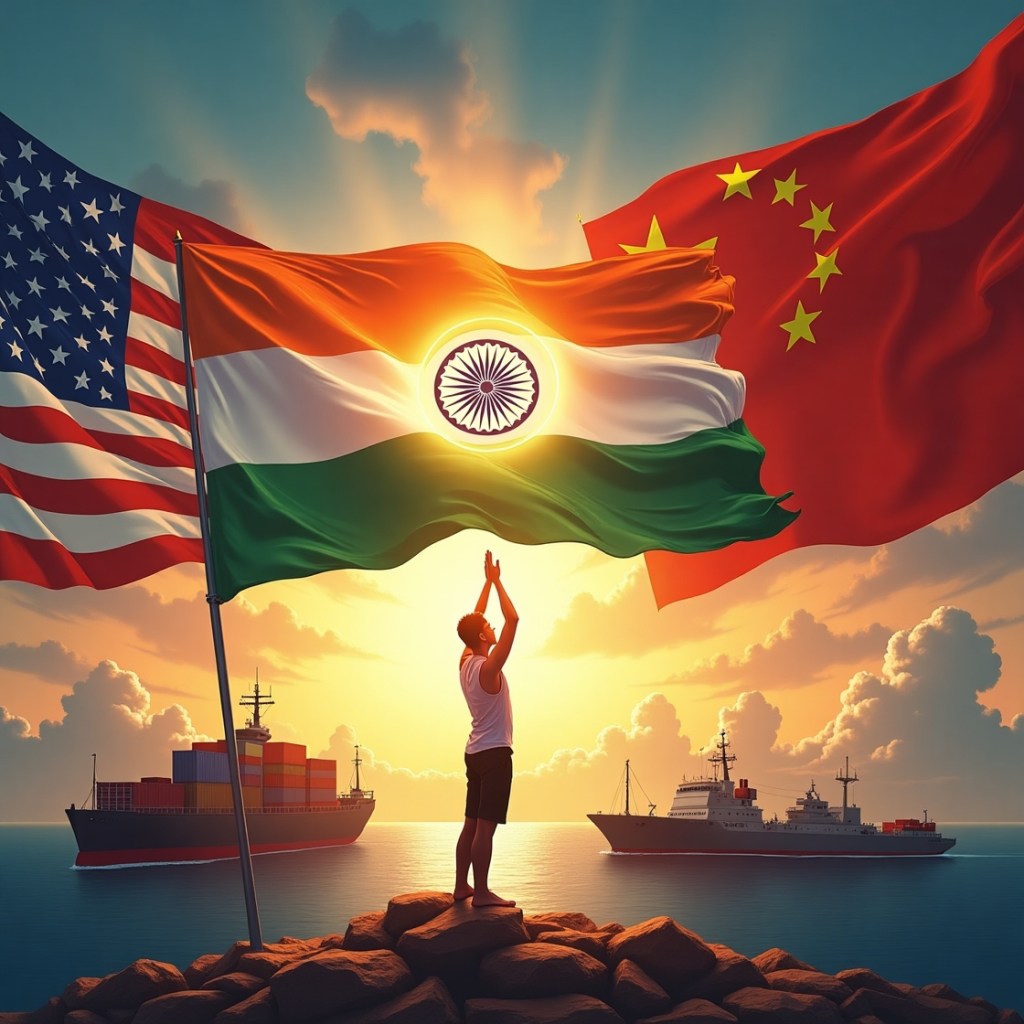
  • The Age of Two Superpowers

    In today’s world, global power is concentrated between two dominant forces — the United States of America and China.
    Yet, both often use their might to pressure smaller nations:

    • USA through sanctions, tariffs, and restrictive trade practices.
    • China through debt traps, coercive diplomacy, and military intimidation.

    For countries caught in between, this creates a vacuum, a desperate need for a fair and trustworthy balancer.

    India: The Natural Balancer

    This is where India steps in. Unlike others, India’s strength is rooted not in coercion, but in partnerships, inspiration, and friendship.

    • India does not bully; it builds trust.
    • India does not impose; it empowers.
    • India does not demand allegiance; it offers genuine cooperation.

    From championing the Global South, to advocating fair trade rules, to being the voice of reason in multilateral forums, India has emerged as a savior for nations seeking dignity in global relations.

    A Civilization Beyond a Nation

    Even when India was not as economically or militarily strong as it is today, the world always turned to it for balance. Why? Because India is not just a nation — it is a civilization thousands of years old that gave humanity its guiding light.

    • India taught the world to live in harmony with nature.
    • It gifted Yoga, a science of health and inner peace.
    • It offered sutras of philosophy and science that laid foundations for mathematics, astronomy, and even modern space research.

    Despite centuries of foreign domination, nearly 800 years of colonial rule that stripped away much of its advancement, the soul of India could never be enslaved.

    The Rise of a Resurgent India

    Today, India has risen again — not just as an economic power but as a moral leader.

    • During the COVID-19 pandemic, India shared millions of vaccines free of cost with poorer nations — not for profit, but purely to save humanity.
    • Today, the Global South respects India as its leader, because India’s leadership is grounded in compassion, not coercion.

    In a divided world, India’s role is unique:

    • India does not divide, it unites.
    • India does not exploit, it empowers.
    • India does not dominate, it balances.

    India’s Moral Leadership in the 21st Century

    This is the India the world needs today — a civilizational leader reborn as a modern power, carrying forward its timeless duty to humanity.

    On this Independence Day, the message is clear:
    The 21st century does not need another superpower. It needs India’s moral leadership — a force that balances power with fairness, and ambition with compassion.

  • They say you don’t know the value of something until it becomes a memory. For a little boy, that truth was carved deep into his heart after losing a grandmother.

    Days were once filled with the comfort of her lap, the smell of sandalwood from her saree, and lullabies that could hush the busiest street. The child adored her, not only for her affection but because she was a safe harbor in a restless world.

    Every evening, there was a little ritual, sitting beside her on the old charpoy, tracing the deep lines on her hands, tugging gently at the loose skin on her arms, and asking,

    “Dadi, what’s inside all this soft, wrinkly skin?”

    With a twinkle in her eye, she would always reply,

    “A lot of wealth… more than you can count.”

    Back then, it was taken literally, imagining hidden treasures: gold coins, sparkling gems, and maybe even magic. She would laugh, and the room would light up.

    But life turns its pages too fast.

    One winter morning, she was gone, slipping quietly into that long, unreturning sleep. The child wept endlessly, pleading to the skies, “Bring her back… I don’t want her wealth, I just want her.”

    The heavens stayed silent.

    Years passed. The world moved on. But those words—“a lot of wealth”—remained.

    One quiet evening, while staring at an old photograph of her smiling face, the truth finally unfolded. Her “wealth” wasn’t gold or jewels. It was health, the years she had lived, the love she had given, the time she had shared. Every wrinkle was a chapter in the book of her life—a map of struggles overcome, laughter shared, and kindness offered.

    The greatest fortune she carried wasn’t hidden, it was visible all along.

    Health. Time. Love.

    These are treasures more precious than any vault can hold. Money may buy medicine, but not the warmth of a grandmother’s touch. It can buy a clock, but never turn its hands back.

    Wrinkles aren’t a sign of age.

    They are proof of a life well-lived.

    Cherish your elders now. Listen to their stories. Hold their hands a little longer. Because the most valuable wealth in this world disappears silently—and once it’s gone, no prayer can bring it back.

    I miss my mama (my dadi)